General aim
Active period: Year 1-5
ACTA, VU, AUMC, UvA-FMG, Inholland, AUAS.


GGD, Sarphati Amsterdam Food4Smiles, PHAROS, Voedingscentrum, Gezonde en Kansrijke start, JGZ, NJi, NCJ, NVD, Coop, MRN&CN, EVAA, Smallsteps/Partou, PANEL, Ivoren kruis, NVvK.
The work on inclusivity and engagement (aim 1) hinges on two approaches: Understanding barriers and facilitating factors for parent/child and care professional (inclusive) engagement. This is done via the collection of stories on best practices and observations of such interactions at the well-baby clinic and a scoping review. This work has been on hold for a while due to illness of the researcher. Data collection via collecting stories and observations is now back on track. At the well-baby clinics youth nurses and physicians are being observed during their consultations of young children and their parents. Both health care professionals and parents are interviewed afterwards to reflect on the observations and how they perceived the communication during consults. The scoping review of the literature on citizens inclusion in research using a micro-sociological critical approach is planned to be written from August 2025.
Results aiding to a more diverse inclusion into the AIMS cohort from WP1 were not feasible due to both the nature of inclusion activities and the deadline for last inclusion (child must be born December 31, 2024 the latest). To increase representation of vocationally trained participants in the Sarphati Ethnography and AIMS cohorts by approaching pregnant women at vaccination sites for the whooping cough in low SEP areas of Amsterdam (concluded per November 2024).
To map the system around oral disease and overweight (aim 2) we focus on Amsterdam North (study protocol approved ACTA-ETC 2023-26790). Contacts have been made with neighborhood organizations (DOCK, Road of Hope, Single Super Moms, Voedselbank (sociale markt; OKT). Key figures in the local community have been identified via neighborhood-tables for residents. The PhD student has interviewed parents. Due to longterm illness, this work was recently carried over to a lecturer-researcher who has started transcribing and analysis. A master student interviewed parents in Amsterdam South-East ( S Abou Elkhair (2024), Understanding barriers to promoting oral health in children: a qualitative study on the perspectives of parents from Amsterdam Southeast and their support seeking strategies, Master Thesis, ACTA).
Also, oral hygiene students have asked families from the neighborhood how they perceive the role of the living environment on their lifestyle related choices regarding food and physical activity (Bergen, F, Gökkaya, I, Imaç, D, Mienstra, I, Munster, S, Poelstra, M (2024) Parents’ perspectives regarding the influence of the living environment in Amsterdam North on their food choices. Bachelor Thesis, Inholland). This has resulted in a bachelor thesis and an abstract was presented at the Dutch Dental Science Days (13 -14 June 2024, Lunteren, the Netherlands) and at the ORCA congress (July 3-6, 2024, Crete, Greece). A scoping review regardingindicators for lack of access to care or avoidance of care is has been accepted for publication (Begovic, Chau, van der Linden & van de Veen (accepted) Understanding underutilization of oral health care in high-income countries: a scoping review. Critical Public Health)
One Group model building session was held together with professionals from formal and informal organizations such as dentists, dieticians, GPs, child health care professionals, social and/or community workers and community centre managers, and parents. Due to illness of the PhD the second GMP is postponed. The PhD student has decided to stop. Work was carried over to a new PhD student, who will combine her tasks with those from WP5, as that work builds on the outcome of the systems analysis.
The health care professionals from the well-baby clinics have asked for a training program regarding the oral health during the first 1000 days. Training to the healthnurses and physicians was provided. On request of the OKT’s in Amsterdam -North, a master student has investigated the child friendliness of oral health clinics in Amsterdam North to create a referral map (and protocol) to be used by the well-baby clinics. This work resulted in a Master thesis (Verboom 2025, Child-friendly Oral Care Practices Amsterdam North, Master Thesis, ACTA) results were presented at the EADPH congress (27-28 September Rome, Italy).
While within the project of MetaHealth the connection with centering care could not be made, it was desired by parents and youth healthcare nurses. We have found extra finances for a separate research project SMILE, where we will develop communication toolkits around the oral health theme to support centering care groups for pregnant women led by midwives and the continuation thereof centering care parenting groups at the Well baby clinics. Preliminary data is being collected. TOOLKITS will also benefit the MetaHealth project to be tested in WP5.
Multiple groups of oral hygiene students are or have been working on the project, spreading the work towards multiple low SEP neighbourhoods, such as in Purmerend (Kasanradjie, Aslantas, Bouhab & Terstall (2025) Prevention of tooth decay and obesity in the first 1,000 days of a child’s life, in collaboration with healthcare professionals and parents. A participatory action research approach in the Wheermolen and Overwhere neighbourhoods of Purmerend, Bachelor thesis, Inholland). Since this fall we are active in Zaandam-oost, where we have been able to work closely with policy makers on youth health and poverty from the municipality and Pact Zaandam-oost. For Amsterdam North and Zaandam-Oost referral maps were created identifying oral healthcare practices who accept children from eruption of the first tooth, work in a prevention-oriented manner, and willing to collaborate with the well-baby clinics in their neighborhood.
In March 2026 a junior researcher has started in WP1 who will dive into question hoe the food pattern is shaped during the transition from breastfeeding/bottle feeding towards solid foods.
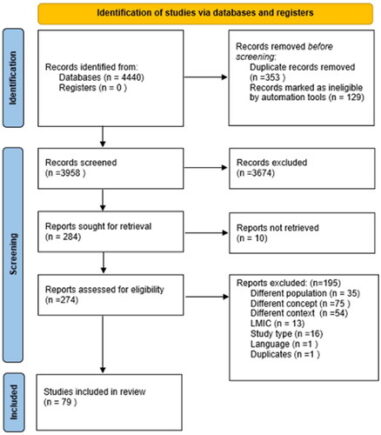
Underutilization of oral healthcare can exacerbate health disparities by allowing preventable oral health problems to go untreated. This scoping review provides an overview of underutilization of oral healthcare, aiming to provide insight into populations at risk for underutilization and which individual and systemic barriers contribute.
Searches were conducted in PubMed and Embase, focusing on studies published between 2018–2025 in high-income countries and populations aged 0–65 years. Studies addressing underutilization of oral healthcare were considered for inclusion.
Seventy-nine studies were included. Populations at risk for underutilization included individuals with chronic illnesses, rural residents, migrants, children, pregnant women and ethnic minorities. Individual barriers included financial constraints, low health literacy, dental anxiety, and competing health priorities, while systemic barriers to utilization of oral healthcare involved high treatment costs, lack of insurance, limited provider availability, and discrimination. Overarching determinants of underutilization commonly included low income, lack of education, and rural residence.
Underutilization of oral healthcare is rarely driven by a single individual or systemic factor but instead results from a combination of multiple barriers. Financial constraints, low health literacy, and dental anxiety often intersect with systemic challenges such as lack of insurance and provider shortages. Addressing underutilization requires targeted, multi-level interventions that consider both individual and structural determinants to improve access to oral healthcare.
Read more