

General aim
To develop and validate mathematical models to numerically simulate the interplay between microbiome, lifestyle, culture and environment and their effects on oral and metabolic health during the first 1000 days of life.
Objectives at micro level
To model the dynamics and species competition within the microbiome communities (gut and oral) using inputs from in-vivo (WP2) and in-vitro studies (WP4) at functional and taxonomic levels.
Objectives at meso level
To model the interplay between host and microbiome in both directions: how does the microbiome influence the host’s health and vice versa.
Objectives at macro level
To model the links between various macro level parameters (lifestyle, dietary habits, demographics, sociocultural factors) and the models in the micro level.
Active period
Year 3-8
UvA-SILS, UvA-IBED, AUMC, TNO Microbiology & Systems Biology, TNO Child Health.


BaseClear, NIBI, Onkolyze, Supabase, Bètapartners.
Update: december 2025
All PhD students in Work Package 3 (WP3) have now commenced their research. The inaugural group meeting of WP3 has been successfully conducted, marking the beginning of collaborative efforts within the work package. Over the past months, WP3 has overseen the completion of two master’s theses and two bachelor’s theses.
Research output:
Allan Duah’s Master’s thesis has led to a paper titled “FedDeepInsight—A privacy-first federated learning architecture for medical data ” which has been published in the Informatics in Medicine Unlocked journal as Open-access publication.
Shivam Kumar and Xiaoqing Han are currently working on a research article titled “Agent-Based Modeling of Microbial and Metabolite Interactions in Early Oral Biofilms ” which is currently in the final phases of preparation.
Master’s theses, Zefan Zhu and Matthias Louws have co-authored a manuscript titled “FAIR and Square: Implementing User-Centric Interfaces for a Secure and Compliant Healthcare Database,” which is being submitted to Information Systems Frontiers journal.
Infrastructure development:
A server required for handling data from metagenomics analysis is currently tested within the University of Amsterdam (UvA) infrastructure. Additionally, automated translations of field identifiers from metadata have been carried out in parallel to streamline data processing and analysis.
Planning:
WP3 meetings are planned to be held monthly, with the venue rotating between IBED, IvI, and SILS to ensure inclusivity and engagement from all participating institutions. This structured approach ensures that WP3 remains on track to achieve its objectives, with regular updates and progress reports shared to keep all stakeholders informed and engaged. The collaborative efforts and individual contributions within WP3 are poised to drive significant advancements in the work package’s focus areas. WP3 is collaborating with WP2 on knowledge graph generation for microbiome modelling parameters and pipeline integration of 16s RNA data with spatiotemporal models. Susanne Pinto from WP2 is primarily involved in the projects. Collaborations are underway with work package 6 on development of agent-based persona-driven modelling and simulation of exposome effect on microbiome health. Lea Hohendorf from WP6 is primarily involved. In addition, project collaboration has been initiated with WP4 to model and simulate the effects of sweet intake on oral microbiome health.
A candidate has been selected for the postdoc position and will join the group starting February 2026.
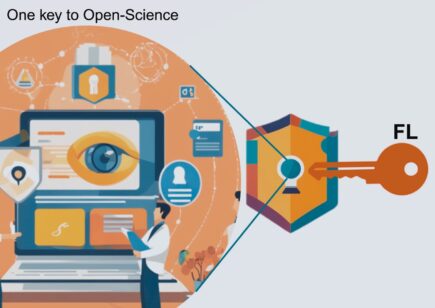
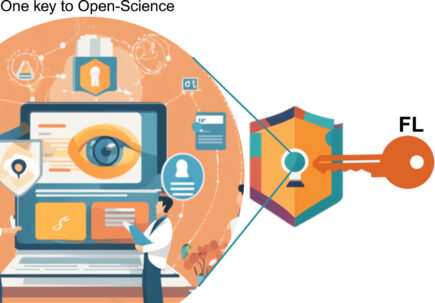
Hospitals and healthcare institutes have incredibly valuable patient and research participant data that could drive major medical breakthroughs. But, it’s private and sensitive that sharing it safely is a huge challenge under strict privacy laws. To solve this, researchers from MetaHealth explored Federated Learning (FL), a method where institutes train computational/AI models on their own private data and only share the learned insights (like updated model instructions) with each other, never the raw patient records.
They have developed a tool called “FedDeepInsight” that transforms complex medical tables into images (since AI is great at analyzing pictures), making the FL process more accurate. Testing showed that adding Differential Privacy (like carefully controlled digital static) ensured no individual patient details could be figured out from the shared information, creating a promising way to unlock medical data’s power while keeping it completely secure and private.
 >
>

The authors have developed tools for creating big, organized library (database) for microbiome data (germs that live in and on our bodies) that can be easily accessed and used by researchers. This will help scientists share information and come up with new ways to tackle health issues, while also following privacy laws and protecting people’s personal information. They use a special platform to build the database and create a helpful set of tools that even non-experts can use to understand and work with the data. Below is a technical summary of the work.
The article proposes the creation of a real-time FAIR (Findable, Accessible, Interoperable, Reusable) compliant database for the handling and storage of human microbiome and host-associated data. This database development pipeline aims to facilitate innovation and reduce costs in research by making standardized, transparent, and readily available (meta)data.
The authors discuss potential conflicts arising from privacy laws and possible human genome sequences in metagenome shotgun data and propose alternate pathways for achieving compliance in such cases. They identify sensitive microbiome data, such as DNA sequences or geolocalized metadata, and consider the role of GDPR data regulations. The database is implemented using an open-source development platform, Supabase, allowing researchers to access, upload, download, and interact with human microbiome data in a FAIR compliant manner. Additionally, a large language model (LLM) is deployed to enable knowledge dissemination and non-expert usage of the database.
Read more


